
July 22, 2026
Paragon Digicom: Trusted Telecom Service Provider in Dubai | Leading Telecom Company in UAE...
The telecommunications industry is booming across developing regions, transforming economies and societies alike. This blog dives into emerging markets case studies to uncover how countries across Africa, Asia, and Latin America are navigating the opportunities and challenges in telecom expansion. These case studies also highlight the role of global finance, government policy, and technological innovation in shaping the future of connectivity.
Telecom isn’t just about making calls—it’s the backbone of digital economies. According to the International Journal of Emerging Markets, telecom networks play a critical role in digital inclusion, powering services like e-learning, telehealth, and mobile banking. As seen in several emerging markets case studies, telecom growth often correlates with GDP growth and improved socio-economic indicators.
In countries that are still undergoing economic transition, telecom helps bridge infrastructure gaps and enables access to services that would otherwise be unavailable, especially in rural and underserved areas.
A recurring theme in emerging markets case studies is the impact of affordable smartphones and mobile data. In sub-Saharan Africa and South Asia, mobile internet is leapfrogging fixed broadband, providing millions with their first online experience. This ease of access is what makes e-commerce, digital payments, and internet services possible.
Governments are playing a central role in telecom expansion. India’s “Digital India” and Brazil’s broadband expansion projects are examples of public investment driving growth. These programs, supported by international financing and domestic policy reform, are instrumental in increasing network reach and capacity.
According to emerging markets finance and trade reports, foreign direct investment and public-private partnerships are accelerating telecom development. International loans, grants, and venture capital are flowing into telecom startups and infrastructure projects, boosting sector competitiveness and innovation.
Poor road access, erratic electricity supply, and limited internet backbones are major obstacles in many emerging markets’ case studies. These factors make it difficult to expand networks, especially in remote and mountainous regions.
Complex licensing systems, corruption, and a lack of standardization in policy frameworks slow down telecom deployment. Investors often face long approval processes or inconsistent regulations that hinder innovation.
In countries that are still undergoing the economic shift to digital economies, digital literacy remains low. Many citizens are not trained to use digital tools effectively, limiting the uptake of telecom-based services.
Among leading **emerging markets case studies**, India is perhaps the most notable. With over 1.2 billion subscribers and one of the lowest data tariffs globally, India has become a telecom powerhouse. The entry of Reliance Jio disrupted the market with affordable data, leading to a massive spike in internet users and data consumption.
Government projects like BharatNet aim to connect thousands of rural villages, aligning with goals outlined in emerging markets finance and trade frameworks.
Another standout from the emerging markets case studies is Kenya, where telecom innovation solved real-world problems. Safaricom’s mobile money transfer service, M-Pesa, transformed financial accessibility. Today, it enables millions to conduct business and receive payments—even without a bank account.
This model is now studied worldwide, including in publications like the International Journal of Emerging Markets, as an example of how telecom can leapfrog traditional infrastructure barriers.
The G20 effect on share market behavior often indirectly boosts the telecom sector. After G20 summits, telecom shares in emerging markets tend to gain traction due to increased investor optimism and policy focus on infrastructure and digital growth.
Telecom’s role in economic strategy is often highlighted in G20 discussions, making emerging markets case studies more attractive to global investors.
International telecom companies are increasingly partnering with local firms. Vodafone’s partnership with Kenya’s Safaricom and Airtel’s expansion in Africa are examples where global expertise and local knowledge combine to accelerate growth.
As documented in the International Journal of Emerging Markets, these collaborations help enhance service quality, ensure compliance with global standards, and increase the scalability of telecom infrastructure.
With 5G, IoT, and AI gaining ground, emerging market case studies suggest that even low-income nations are preparing for next-gen telecom advancements. The key lies in combining public policy support, international investment, and private innovation.
Reports from emerging markets finance and trade indicate that industries such as fintech, telemedicine, and agriculture are increasingly reliant on telecom, further driving sector growth.
Telecom in emerging markets is more than a utility—it’s a catalyst for transformation. The emerging markets case studies discussed here show that while infrastructure, regulation, and literacy pose challenges, strategic investments and innovation create vast opportunities.
With support from governments, the private sector, and international stakeholders, the telecom sector can lead the next wave of economic development in countries that are still undergoing economic transition. The journey has just begun, and the future is digitally connected.
A: They highlight how developing countries are expanding telecom access and overcoming infrastructure and policy challenges.
A: Telecom enables e-commerce, digital banking, and communication for businesses, boosting both local trade and global investment.
A: G20 policies often emphasize digital and infrastructure growth, improving investor confidence in telecom stocks in emerging markets.
A: It enables access to education, healthcare, and banking services, helping these nations develop faster.
A: It publishes research on telecom’s economic impact and tracks global trends through detailed emerging markets case studies.
Paragon Digicom: Trusted Telecom Service Provider in Dubai | Leading Telecom Company in UAE...

The Future of VoIP: How Business VoIP Solutions Can Achieve Cost-Effective Global Communication In...
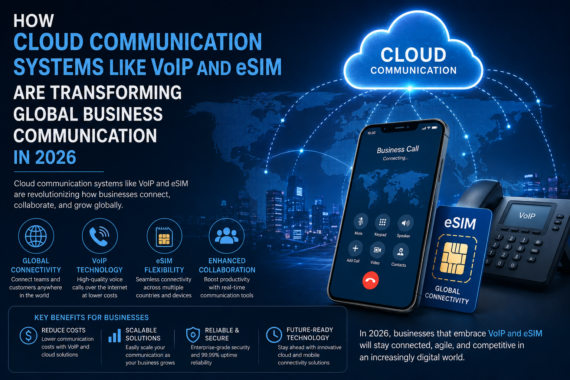
How Cloud Communications Systems Like VoIP and eSIM Are Transforming Global Business Communication in...