
July 22, 2026
Paragon Digicom: Trusted Telecom Service Provider in Dubai | Leading Telecom Company in UAE...

In the ever-evolving landscape of the digital world, two crucial concepts play a significant role in ensuring the seamless flow of data and content: Co-location and POP (Points of Presence). These terms are at the core of the internet infrastructure, enabling us to access websites, stream videos, and communicate globally. In this blog post, we will delve into what co-location and POP are, how they function, and why they are essential for the functioning of the Internet.
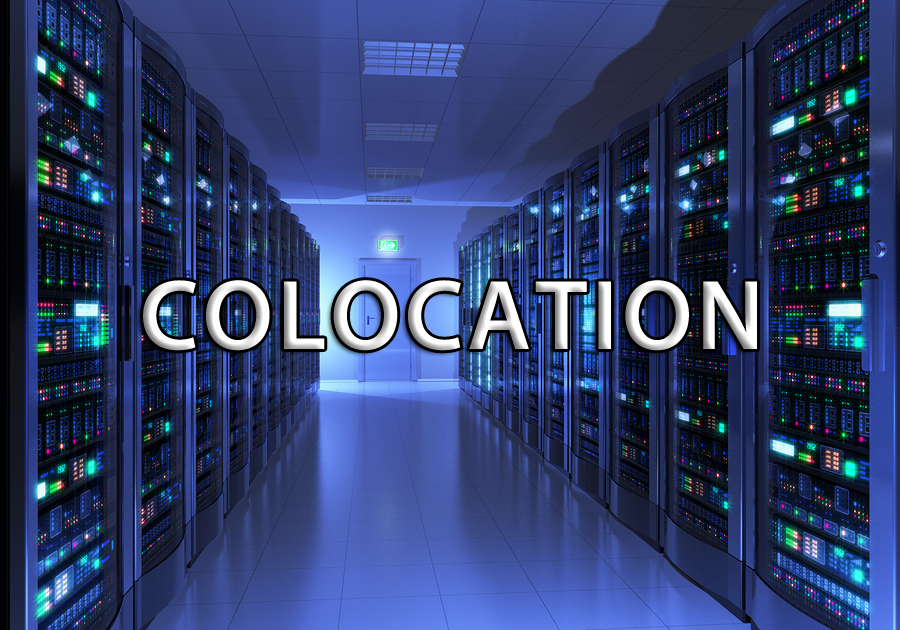
Co-location, short for “co-location hosting” or “co-location services,” refers to the practice of housing private servers and networking equipment within a third-party data center. Companies, organizations, and service providers choose co-location as a solution to store and manage their hardware in a controlled, secure, and well-connected environment. Here’s why co-location is crucial:
Security and Reliability of Data centers that offer co-location services are equipped with advanced security measures, including access controls, surveillance systems, and fire suppression systems. These facilities are built to withstand natural disasters, ensuring the safety of your data and equipment.
Redundancy co-location facilities often have redundant power supplies and network connections, minimizing the risk of downtime due to power outages or network failures. The connectivity of these data centers is strategically located in network-rich areas, providing access to high-speed internet connections and a wide range of network service providers. This connectivity is vital for businesses that require fast and reliable internet access.
Cost savings in Co-location eliminates the need for a company to build and maintain its data center, which can be expensive and resource-intensive. By outsourcing this infrastructure, businesses can save on upfront capital costs and ongoing maintenance expenses.
Scalability that can easily scale their infrastructure by adding more servers or networking equipment to their co-location space without the need for major construction or equipment upgrades.
POPs are strategically placed in various geographic regions to reduce the time it takes for data to travel from a source (e.g., a server) to its destination (e.g., a user’s device). By minimizing latency, internet services become faster and more responsive.
CDNs, which operate multiple POPs globally, store cached copies of websites, images, videos, and other content. When a user requests content, it is delivered from the nearest POP, reducing server load and improving content delivery speed.
POPs enable ISPs and CDNs to balance internet traffic across multiple servers and data centers. This ensures that no single server is overwhelmed with requests, maintaining service reliability.
Multiple POPs provide failover and redundancy capabilities. If one POP experiences issues or becomes unavailable, traffic can be rerouted to another POP, minimizing downtime.
Author: Rabeil Tariq
Paragon Digicom: Trusted Telecom Service Provider in Dubai | Leading Telecom Company in UAE...

The Future of VoIP: How Business VoIP Solutions Can Achieve Cost-Effective Global Communication In...

How Cloud Communications Systems Like VoIP and eSIM Are Transforming Global Business Communication in...