
July 22, 2026
Paragon Digicom: Trusted Telecom Service Provider in Dubai | Leading Telecom Company in UAE...

In today’s fast-paced digital era, communication is the backbone of progress. The importance of telecommunication is more significant than ever, as it connects individuals, businesses, and governments across the globe. Whether it’s a video call with a loved one, a multinational business deal, or a government emergency alert system, telecommunication forms the invisible thread that holds our modern society together.
This blog explores the vital role telecommunication plays in the 21st century, its influence on economies, and how its infrastructure continues to evolve with new technologies.
The importance of telecommunication lies in its ability to enable instant communication across large distances. It is the foundation of today’s internet-driven society, allowing voice, video, and data to be transmitted efficiently. From banking systems to healthcare consultations and remote learning, everything depends on a stable telecommunication network.
Over the past few decades, telecommunication has evolved from traditional landlines to advanced networks and wireless technology, enabling not only person-to-person interactions but also machine-to-machine (M2M) communication, smart cities, and Internet of Things (IoT) applications.
When analyzing the economic impact of telecommunication, it becomes clear that strong communication networks drive national development. Economies thrive when people and organizations can communicate efficiently. A well-established telecom system attracts global investments, improves access to information, and facilitates e-commerce and remote employment.
For example:
Small businesses can reach customers across borders through digital marketing and VoIP calls.
Farmers can access weather forecasts and market prices via SMS.
Remote workers can participate in international teams without physical relocation.
Governments and policymakers often prioritize the development of telecommunication infrastructure, such as fiber optic networks, 5G towers, and satellite communication systems, to promote digital inclusion and economic empowerment.
During crises, the importance of telecommunication becomes undeniable. Whether it’s a natural disaster, health emergency, or political unrest, fast communication saves lives. Real-time updates from news outlets, alert systems, and coordination between emergency services all rely on telecom systems.
For instance:
During the COVID-19 pandemic, telecom systems supported remote healthcare, vaccination scheduling, and information dissemination.
In natural disasters, text alerts and warning sirens are often sent through telecom networks to affected areas.
A robust telecom system ensures that essential services can respond quickly and effectively when needed most.
To truly grasp the importance of telecommunication, it’s useful to explore some real-world telecommunication infrastructure examples:
These systems, which serve as the foundation for digital communication, are always being updated and expanded to satisfy growing demand.
The evolution of network and wireless technology has dramatically enhanced the importance of telecommunication in our lives. Traditional wired communication is giving way to fast, flexible wireless solutions like Wi-Fi 6, 5G, and satellite-based internet (e.g., Starlink). These technologies connect previously unreachable areas, making the world more inclusive.
For example:
5G provides incredibly high speeds and minimal latency, making it perfect for telemedicine, driverless vehicles, and smart devices.
Wireless mesh networks help connect rural areas where traditional cable networks are not feasible.
IoT devices, powered by wireless networks, communicate seamlessly to improve everything from home security to industrial automation.
These innovations make communication faster, more reliable, and accessible — further emphasizing the importance of telecommunication in a digital world.
Aside from its economic and technological impact, the importance of telecommunication also extends to social well-being. People stay emotionally connected across borders through social media, messaging apps, and video calling platforms. These connections reduce feelings of isolation and foster stronger global communities.
Moreover, telecommunication enables:
Remote learning for students worldwide.
Online healthcare consultations, improving access to doctors.
Live events and webinars, allowing global collaboration.
This digital connectivity promotes global understanding and inclusivity.
The importance of telecommunication in a digitally connected world cannot be overstated. From economic development and crisis response to social bonding and innovation, it is the lifeline of modern society. As network and wireless technology continue to evolve and telecommunication infrastructure examples become more widespread, global connectivity will only improve.
A strong telecom network is no longer a luxury—it is a necessity. The future will demand even more reliable and fast communication systems, and investing in telecom will remain a key driver for growth and resilience.
Telecommunication is essential for communication, economic development, education, emergency response, and access to information in today’s digital society.
The economic impact of telecommunication includes job creation, improved productivity, e-commerce growth, and the attraction of global investments.
Examples include fiber optic cables, 5G networks, mobile towers, satellite systems, and submarine data cables.
Network and wireless technology enable high-speed, mobile, and reliable communication, supporting everything from smartphones to smart cities.
Telecommunication ensures real-time alerts, emergency coordination, and continuous access to critical information during disasters or crises.
Paragon Digicom: Trusted Telecom Service Provider in Dubai | Leading Telecom Company in UAE...

The Future of VoIP: How Business VoIP Solutions Can Achieve Cost-Effective Global Communication In...
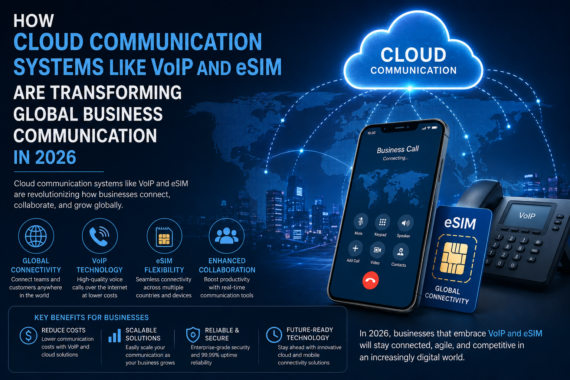
How Cloud Communications Systems Like VoIP and eSIM Are Transforming Global Business Communication in...