
July 22, 2026
Paragon Digicom: Trusted Telecom Service Provider in Dubai | Leading Telecom Company in UAE...

Session Initiation protocol (SIP) is a signaling protocol which is employed to establish connection between IP devices. This connection involves voice communication, instant messaging, file transfer and video conferencing.
SIP utilizes two other well-known protocols, Hypertext Transfer Protocol, or HTTP, which sets up the broadly embraced techniques for reviewing sites. SIP associations seem like those utilized for getting to the web.
The other is Simple Mail Transfer Protocol, or SMTP, which is used while sending email. Like email headers, SIP incorporates metadata for initiating a session between two ends. SIP Phones are used to employ SIP.
On a specialized level, SIP conveys VoIP traffic over either UDP or TCP on ports 5060 or 5061. However, the web browsing occurs via ports 80 and 443.
SIP is an application layer protocol and doesn’t manage any multimedia session details, for that purpose Session Description Protocol (SDP) is employed, whereas Real-Time Transport Protocol (RTP) is used for transfer of data.
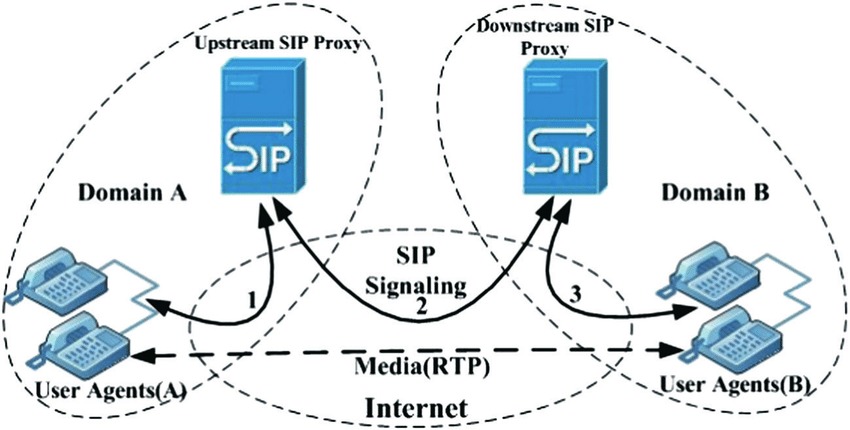
SIP ARCHITECTURE:

SIP architecture consists of SIP user agents and SIP servers, where user agents are end-points like soft phones, mobile phones, or IP phones, which can establish a bi-directional communication via request and response messages. Request and response messages are short messages that contains the complete detail of the call. However, servers are deployed to manage and locate other user agents. They also provide accounting services and SIP forwarding.
Paragon Digicom: Trusted Telecom Service Provider in Dubai | Leading Telecom Company in UAE...

The Future of VoIP: How Business VoIP Solutions Can Achieve Cost-Effective Global Communication In...
How Cloud Communications Systems Like VoIP and eSIM Are Transforming Global Business Communication in...